SLOW CRAFT / 慢一点 喝好茶
Slow Craft
Picking the leaves is the first half. Letting slow craft do the rest is the second. This is the brand's real moat — and the most concrete form of 'good tea takes its time.'
"Cost is high. Everything is small-batch and bespoke. Volume isn't large — but one sip keeps people coming back."
01
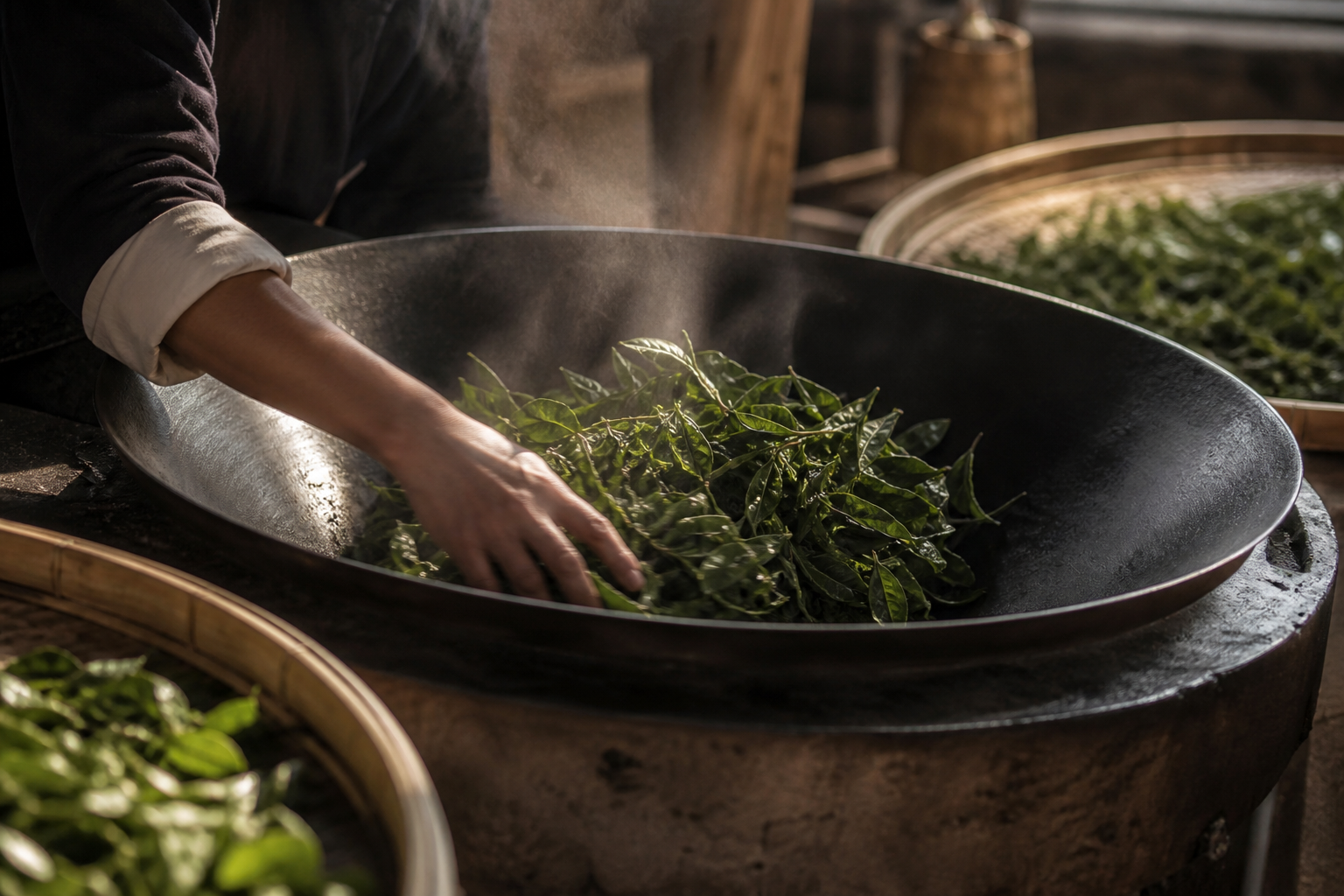
Raw Pu-erh · Light Kill-Green
Kill-green at 60–85°C
Light kill-green, stopped the moment it's done. A young tea may not charm with high aroma, but it keeps far more inner substance and room for years of transformation. The awe is left to time.
- Kill-green temperature
- 60–85°C
- Standard
- Done is done · no chasing high aroma
- Goal
- Room for years of aging
Industry Reality
Raw Pu-erh is academically classed as green tea (unfermented), but the real difference from green tea is the kill-green step. Green tea uses leaf-surface temperatures of ≥85°C — the enzymes are killed, you drink amino-acid freshness, finish it that year, store it cold. Raw Pu-erh uses 60–85°C — enzymes are dialed down, not destroyed, leaving room for years of enzymatic-oxidation reactions. That is the material basis of 'better with age.'
Industry Standard
Many brands tune for instant appeal in young tea — high-heat kill-green (more freshness), heavy rolling (fuller taste), heavy withering (less bitter), light pile fermentation right after kill-green (sweeter sip). But the leaf's inner substance is finite — burning it up early is exactly what shrinks the room for later transformation.
How Gudaye Does It
Gudaye chooses light kill-green, stopped the moment it's done. The young tea will be a bit more astringent, but the room for years of aging is preserved. This demands precise control over leaf condition, temperature, and timing — a harder, more attentive way of working, not a shortcut.
02
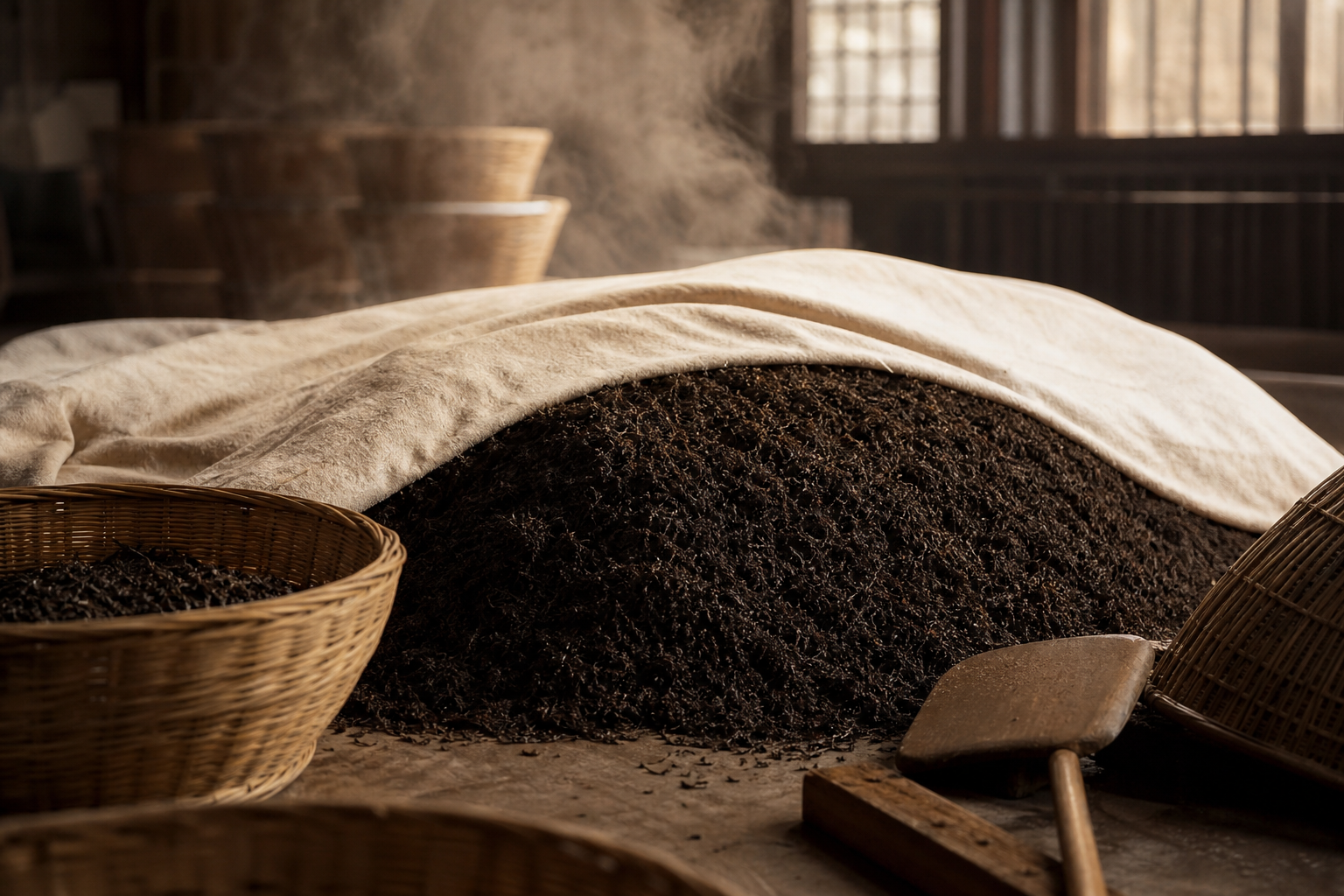
Ripe Pu-erh · Traditional Pile Fermentation
Natural aging 3–5 years
Traditional pile-fermented ripe Pu-erh isn't always easy to sell while young, but time will retreat the pile flavor and leave the depth.
- Method
- Traditional pile fermentation
- Aging
- 3–5 years natural aging before release
- Supplement
- Sourced aged ripe teas from market
Industry Reality
Traditionally pile-fermented aged ripe Pu-erh is expensive precisely because it gets more remarkable in storage. The catch is the young-tea phase: a noticeable pile flavor that doesn't sell easily.
Industry Standard
To dodge that pile flavor, the industry developed 'new-school' methods — off-ground fermentation, wood-board fermentation, basket fermentation — that taste clean and pleasant young, but lose the room for transformation. A few years on, only sweet water remains; the depth never arrives.
How Gudaye Does It
Gudaye stays with traditional pile fermentation. The ripe tea Gudaye makes itself ages naturally for 3–5 years before going to market. In parallel, Gudaye sources the very few aged ripe teas with both years and quality from outside, to round out a 'drink-ready' line.
03
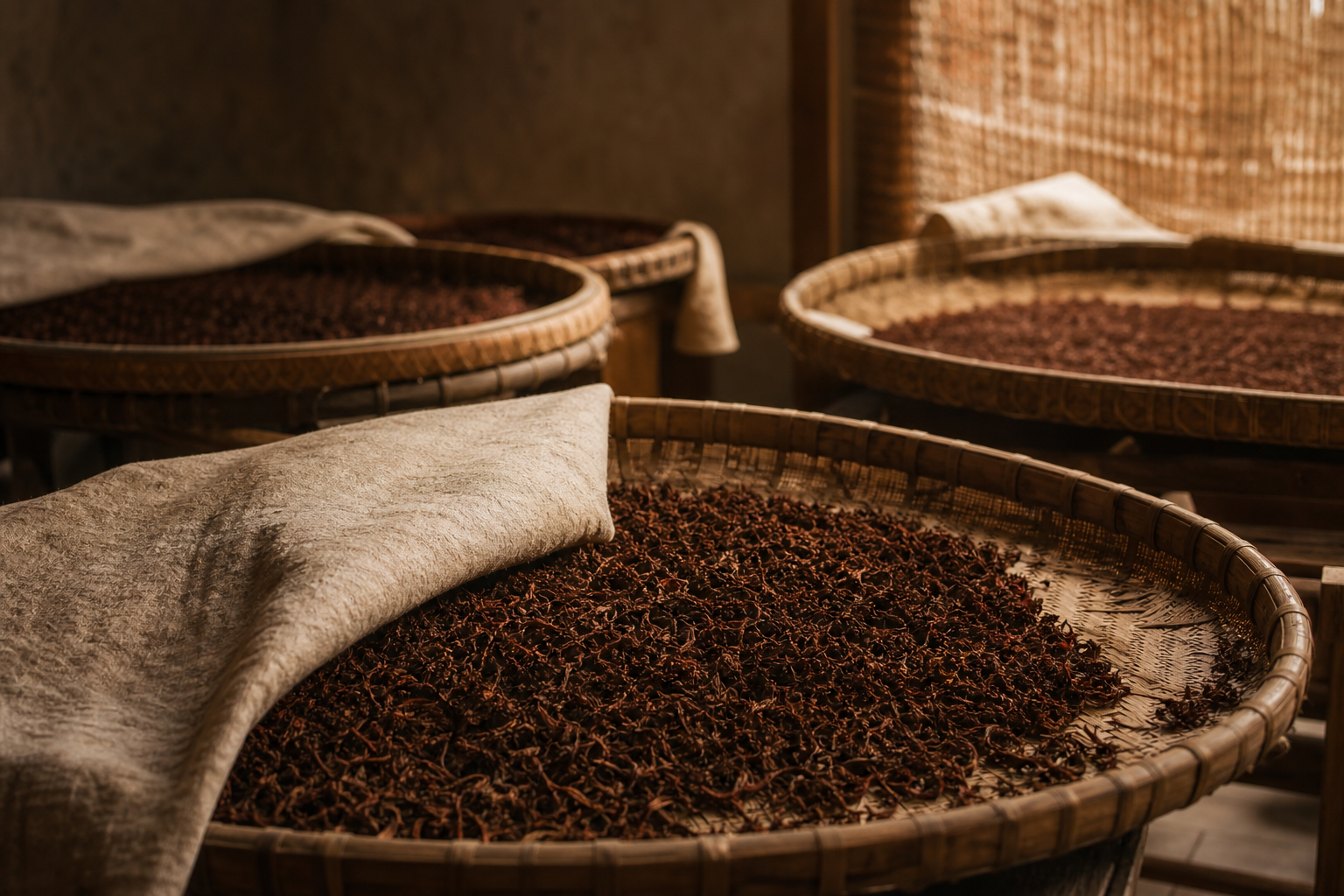
Black Tea · Bamboo-Basket Fermentation
About 200 kg per year
Made with the slowest old methods by a retired father-and-son team from a Fengqing tea factory. This isn't industrial production — it's the most plain-handed craft.
- Annual output
- About 200 kg
- Makers
- Retired Fengqing father-and-son
- Nature
- Hand-made · non-industrial
Industry Reality
Yunnan red tea (Dianhong) was once a glorious wartime tea, foreign-exchange tea, and state-gift tea — built on Yunnan's old-tree resources plus the fermentation skills of an older generation. Most Dianhong today runs on modernized gardens and automated equipment — for efficiency, the spine is gone.
How Gudaye Does It
Gudaye works with a retired father-and-son team from a Fengqing tea factory, reconstructing the slowest old methods. At their absolute most, they make about 200 kg a year. The small number isn't a marketing line — it's the limit of two pairs of hands.
- 01 Withering Bamboo-mat withering — fresh leaves slowly waking in the scent of bamboo
- 02 Fermentation Breathing bamboo-basket fermentation — controlling every shift in temperature and humidity
- 03 Drying Traditional shutter-style dryer — gently sealing in the purest aromas
04
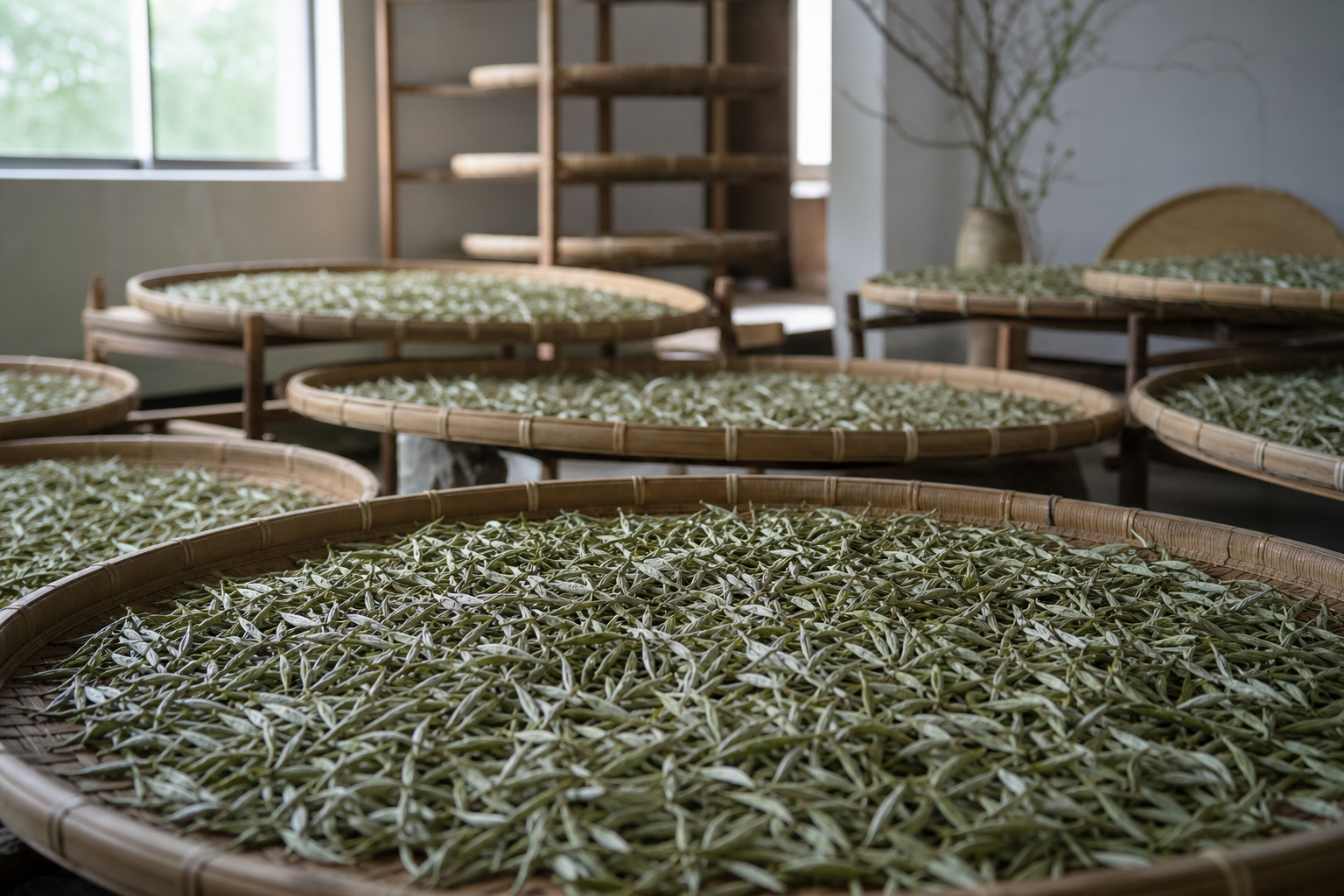
White Tea · Natural Withering
Full shade-drying ≥ 4 days
A small dedicated zone, regardless of cost or time, doing only the most plodding and most traditional full shade-drying.
- Withering duration
- ≥ 4 days
- Method
- Full shade-drying · no drying equipment
- Market
- Almost extinct
Industry Reality
White tea has a dilemma: choose Fujian craft (the craft is correct, but the leaf is small-tree) or choose Yunnan old trees (the leaf is top-tier century-old material, but the craft has structural problems). Yunnan's white-tea craft has those problems because the soul of white tea is in the withering — the best natural withering needs ≥ 4 days. But during Yunnan's spring tea season the primary workshops are mostly making Pu-erh, with huge volumes of fresh leaves and no space, no hands free to wait 4 days. So Yunnan white tea is essentially 'wither one night + sun-dry the next morning' — depth gets sacrificed.
How Gudaye Does It
Gudaye keeps a small zone aside in the primary workshop, regardless of cost or time. While the rest keeps making fast Pu-erh, that small area only does the most plodding, most traditional full shade-drying. This is exactly why a purely shade-dried Yunnan white tea is almost impossible to find on the market.